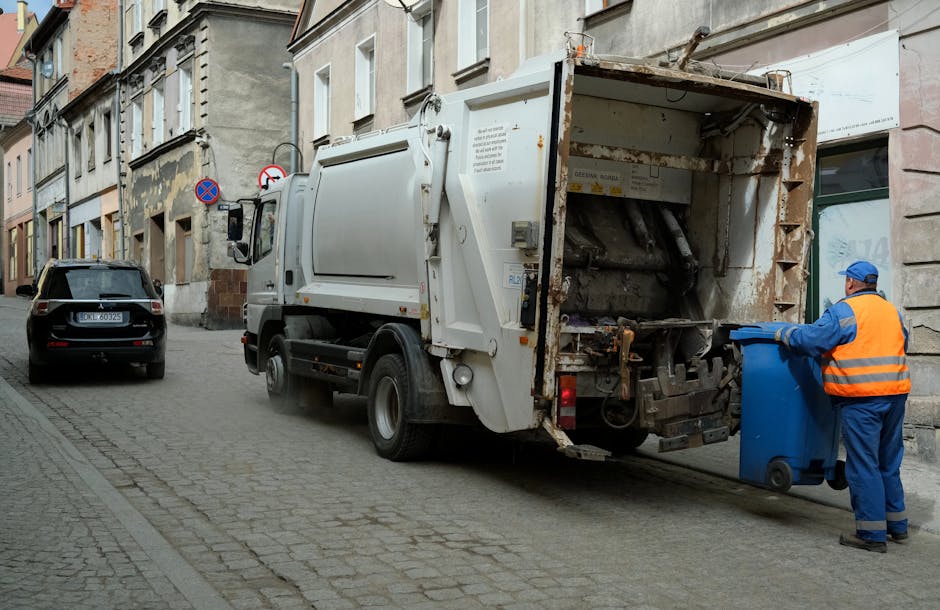
Avoid hidden rubbish removal costs in Forest Hill Lewisham
If you have ever booked rubbish clearance and then watched the price creep up on the day, you will know the feeling. It is annoying, a bit stressful, and frankly avoidable more often than people think. The good news is that Avoid hidden rubbish removal costs in Forest Hill Lewisham is not about hunting for the cheapest headline price. It is about understanding what is included, what is not, and how to compare quotes properly before anyone lifts a bag.
That matters whether you are clearing a flat near Forest Hill station, dealing with a packed garage after a renovation, or sorting out furniture that has been sitting too long in a spare room. The difference between a fair quote and a painful one usually comes down to detail. In this guide, you will get a plain-English way to spot extras early, ask better questions, and choose a service with fewer surprises. Nice and simple. Well, as simple as rubbish removal ever gets.
Why hidden rubbish removal costs matter
Hidden charges are not just a budgeting nuisance. They can change the whole experience of a clearance job. A quote that looks fine on the website can balloon if the provider adds charges for access issues, extra labour, waiting time, bulky items, mixed waste, or disposal of items they class as specialist waste. If you are working to a tight budget, that can throw everything off.
In Forest Hill and the wider Lewisham area, homes and businesses often have the kind of access that makes pricing a little more nuanced: narrow stairways, basement flats, shared entrances, controlled parking, top-floor conversions, and side returns that are not exactly truck-friendly. None of that is unusual. But it does mean a cheap estimate can turn expensive very quickly if the provider did not ask the right questions in advance.
There is another reason this matters: trust. If a company is transparent about pricing, it usually signals that they are organised in other areas too. They are more likely to explain what happens to your waste, how they sort it, and whether they can handle items like white goods, mattresses, or mixed household junk. That does not guarantee perfection, of course, but it is a strong starting point.
Key takeaway: the safest way to avoid hidden rubbish removal costs is to compare like-for-like quotes, confirm access details, and get clarity on what triggers extra charges before the job starts.
How hidden rubbish removal costs in Forest Hill Lewisham usually work
Most rubbish removal companies price jobs using a few core factors. The exact formula differs, but the logic is similar. You are usually paying for a combination of volume, weight, labour, access, waste type, and disposal costs. If any one of those changes after the initial quote, the final price may change too.
Here is the usual pattern:
- Volume: how much space your rubbish takes up in the van or truck.
- Weight: some materials are heavier and cost more to tip.
- Labour: the number of staff and how long the job takes.
- Access: stairs, long walks, parking distance, or difficult entry points.
- Waste category: general household waste is different from builders' waste or hazardous items.
- Additional handling: dismantling furniture, carrying items from lofts, or removing heavy appliances.
Sometimes the advertised price is just a starting point. That is not necessarily bad practice if the provider is clear about it. The problem starts when the price is presented as if it is fixed, but the small print tells a different story. You know the sort of thing: "from GBPX" without context, then a flurry of extras once the team arrives.
To make the process more predictable, many people compare waste services with related services first. For example, if you are clearing a whole property, it can help to look at house clearance support or broader home clearance options rather than a single ad hoc pickup. If the job includes old wardrobes, tables, or sofas, you may also want to check furniture disposal or furniture clearance. The point is to match the service to the job, not the other way around.
And yes, it helps to ask a real person. A five-minute conversation can save a lot of head-scratching later.
Key benefits and practical advantages
Being careful with pricing is not just about saving a few pounds, although that is welcome enough. It also makes the whole clearance job smoother. You can plan your day, avoid awkward disputes, and reduce the chance of stuff being left behind because nobody agreed on the final scope.
1. Better budget control
If you know the likely final cost before the team arrives, you can make sensible decisions. You might decide to combine a few jobs into one visit, separate bulky items from general waste, or wait until you have enough clearance work to make the trip worthwhile. That is often more cost-effective than booking in a rush.
2. Less stress on the day
A transparent quote means fewer surprises. The crew turns up, looks at the load, and gets on with it. No awkward haggling by the front door. No re-quoting while you are already halfway through the packing. Just less friction, which is worth a lot.
3. Better comparison shopping
When the pricing structure is clear, comparing providers becomes much easier. You can look at what is included, whether labour is capped, and whether certain items are excluded. This is especially useful if you are comparing rubbish removal with general waste removal services or builders waste clearance.
4. More suitable service choice
Sometimes the real saving comes from choosing the right category of service in the first place. A loft full of mixed household items may be better handled as loft clearance. A cluttered office may be better suited to office clearance. A garden with soil, branches, and old pots might need garden clearance. Different jobs can have different pricing logic, and that matters.
5. A cleaner, more responsible outcome
Good providers usually explain how they sort, recycle, and dispose of items. That is useful not only for peace of mind, but because some materials need special handling. If you need to separate out appliances, for example, it helps to see whether the company offers fridge and appliance removal or safer handling for unusual items through hazardous waste disposal.
Who this is for and when it makes sense
This advice is for almost anyone arranging rubbish clearance in Forest Hill or nearby Lewisham neighbourhoods, but it is especially relevant if your job has more than one moving part. One bag of garden waste is easy. A full flat with mixed items and awkward access? That is where details start to matter.
- Homeowners clearing out a loft, garage, spare room, or whole house.
- Tenants who need to leave a property tidy before moving out.
- Landlords and letting agents arranging urgent clearances between tenancies.
- Businesses dealing with office clutter, records, or redundant furniture.
- Builders and trades who want straightforward removal of leftover site waste.
- Families handling bereavement clearances, where transparency and sensitivity matter just as much as price.
It also makes sense if you are only removing a few items but the items are awkward. A fridge in a narrow hallway, a mattress up three flights, or a sofa that barely fits through the door can easily change the labour involved. Truth be told, these are the jobs where the hidden costs usually hide. Not in the headline, but in the handling.
If your clearance includes a sofa or mattress, check the relevant service pages such as mattress and sofa disposal. For flats or apartments where space is tight and access can be fiddly, flat clearance may be more appropriate than a generic rubbish removal booking.
Step-by-step guidance
If you want to avoid hidden rubbish removal costs in Forest Hill Lewisham, a structured approach works best. Here is the process I would recommend.
Step 1: List everything you want removed
Do not guess. Write down the items, the approximate quantity, and whether anything is unusually heavy, fragile, or awkward. A quick room-by-room note on your phone is usually enough. If you are clearing a whole property, group items into categories: furniture, bagged waste, appliances, garden waste, and special items.
Step 2: Check access properly
Ask yourself: how far is the property from the vehicle? Are there stairs? Is there a lift? Can a van park close by, or will the team need to carry items a long way? Does the building have time restrictions or controlled parking? These are the details that often trigger extras.
Step 3: Ask for what is included in the quote
Before you agree to anything, ask what the quote covers. Does it include labour, loading, disposal, VAT if applicable, parking, and waiting time? Are there any extra charges for dismantling furniture or separating waste? If the answer is vague, take that as useful information.
Step 4: Confirm excluded items
Some items may not be accepted in standard rubbish clearance. Hazardous materials, certain electricals, fridges, and heavily contaminated items may need a separate route. This is where pages like fridge and appliance removal and hazardous waste disposal become relevant. If a company does handle them, ask whether they are priced separately.
Step 5: Ask about pricing model
Some companies price by load size. Others price by time, item count, or a mix of both. A few use minimum charges. There is nothing wrong with that, but you need to know which model you are being quoted on. Otherwise comparisons are apples and pears.
Step 6: Get the agreement in writing
Even a simple written confirmation by email can help. It should set out the items, the estimated price, any possible extras, and the circumstances that would change the quote. That tiny bit of admin can save a lot of back-and-forth.
Step 7: Prepare the items before collection
Bag loose waste, keep items in one place if possible, and separate anything you are unsure about. If the crew arrives and everything is already ready to load, the job is usually faster and less likely to pick up avoidable labour charges. Small effort, real payoff.
Expert tips for better results
In our experience, the best way to keep costs under control is to think like the removal team for a minute. What would make the job slower, riskier, or harder to estimate? Then remove those variables early.
- Send photos before booking. Wide shots are useful, but close-ups help too. One shot of the room, one of the items, one of the access route. Simple.
- Be honest about volume. Underestimating is the fastest route to a higher final bill.
- Separate reusable furniture if you can. It may open up a different disposal route and reduce waste volume. Sometimes it does, sometimes it does not, but it is worth asking.
- Plan around building rules. If your block has lift booking slots or restricted hours, mention that early.
- Ask whether the provider recycles. A company focused on recycling and sustainability may be better placed to explain where different waste streams go.
- Check payment method and timing. Knowing when payment is due avoids awkwardness at the kerbside.
One overlooked tip: if you have several small jobs across a month, combine them. A couple of charity bags, a broken bookcase, and some garden cuttings are each tiny on their own, but together they can create a costly series of separate visits. One visit is usually kinder to your wallet.
And yes, if a quote sounds too neat and too low, it is worth asking a second question. There is often a reason.
Common mistakes to avoid
Most hidden-cost problems come from a handful of simple mistakes. They are easy to make, especially when you are busy or just want the mess gone quickly.
- Choosing the cheapest headline price without checking the details. A low "from" price can be misleading if it excludes labour, access, or disposal.
- Not describing the waste accurately. Mixed junk, bricks, soil, and furniture are not the same thing.
- Forgetting about parking and access. A van parked half a street away changes the job.
- Assuming all items are standard waste. Appliances, mattresses, and hazardous items can need special handling.
- Leaving everything until the day of collection. Then the crew is waiting while you sort through boxes. Nobody enjoys that.
- Ignoring terms and conditions. Tedious, yes. Useful, also yes.
One more subtle mistake: not asking whether the provider is insured or how they handle waste responsibly. If a company is transparent about insurance and safety and can explain its working practices, that is usually a positive sign. It does not solve every problem, but it does reduce the odds of a bad surprise.
Tools, resources and recommendations
You do not need specialist software or a spreadsheet wizard's patience to keep rubbish removal costs under control. A few simple tools are enough.
- Your phone camera: take clear photos of the load and the access route.
- A notes app: list item types and rough quantities.
- Building access details: note gate codes, lift restrictions, or parking constraints.
- A measuring tape: useful for large items like wardrobes, sofas, and appliance spaces.
- The provider's pricing page: for example, pricing and quotes can help you understand how the company frames costs.
- Relevant service pages: use pages such as garage clearance, house clearance, or business waste removal to match the job to the service.
If you are trying to decide whether to use a skip or a collection service, the page on what can go in a skip is useful for understanding what sorts of material may be accepted, and where extra care is needed. That comparison alone can save people from a fairly expensive guess.
Law, compliance, standards, and best practice
For waste services in the UK, compliance and good practice matter. You do not need to become an expert in waste legislation to book a clearance, but you should expect a provider to act responsibly. At a minimum, they should be able to explain how waste is collected, sorted, transported, and disposed of in line with normal legal expectations and industry practice.
From a customer's point of view, a few standards are worth expecting:
- Clear pricing terms: no misleading headline rate that hides obvious exclusions.
- Responsible handling: waste should be managed appropriately, especially for electricals, appliances, and anything potentially hazardous.
- Proper documentation where relevant: especially for commercial or business waste jobs.
- Safe working practices: lifting, carrying, and access should be handled carefully to reduce damage and injury risk.
- Data protection awareness: if paperwork or confidential items are involved, ask about secure handling or shredding.
If you are clearing an office or business premises, you may want to review office clearance and confidential shredding. Those services are particularly helpful where paperwork, storage units, and mixed business waste can become tangled together. Business jobs tend to need a bit more structure. Not always, but often.
Best practice is not fancy. It is simply clarity, safety, and honest scope-setting. The boring stuff, basically. The boring stuff saves money.
Options, methods, or comparison table
If you are deciding between different ways to deal with rubbish, it helps to compare the main options side by side. What saves time is not always what saves money, and what looks easiest may not suit the material you have.
| Option | Best for | Potential cost risks | Good to know |
|---|---|---|---|
| Ad hoc rubbish removal | Mixed small-to-medium loads, quick clearances | Hidden extras if access or item type is unclear | Works best with accurate photos and a written quote |
| Flat clearance | Full or partial residential clearouts | Labour charges if property details are incomplete | Useful for furniture, bags, and multiple room contents |
| House clearance | Whole-property jobs | Scope creep if extra rooms or lofts are added on the day | Often better value than multiple separate collections |
| Builders waste clearance | DIY and renovation debris | Heavier material, mixed waste, or restricted items | Best when the waste is sorted beforehand |
| Skip hire | Static projects with enough space for a skip | Permit, overfilling, and wrong-material issues | Useful if you are happy to load the skip yourself |
The right option depends on the waste, your access, and how much lifting you want to do yourself. If you are stuck between a couple of choices, think about time as well as cost. Some options look cheaper at first glance, then eat a weekend whole. And no one really wants that.
Case study or real-world example
A common local scenario goes like this. Someone in Forest Hill is clearing a first-floor flat after a move. They have a wardrobe, two armchairs, several bin bags, a broken chest of drawers, and an old fridge in the kitchen. They ring around for quotes and get one very low figure, one moderate figure, and one that seems higher but includes more detail.
The lowest quote turns out to be "for general waste only" and excludes the fridge, dismantling, and any carry from upper floors. The moderate quote asks for photos and confirms access before giving a final estimate. The higher quote looks more expensive at first, but it includes labour, appliance removal, and disposal fees. When the full picture is taken into account, it is actually the more honest option.
That is the bit people often miss. The cheapest quote is not always the cheapest job.
In practice, the person saves money by reducing uncertainty, not by chasing the lowest number. They also avoid the last-minute argument about whether the fridge "counts". A little dull? Perhaps. Effective? Definitely.
Practical checklist
Use this checklist before you book any clearance job in Forest Hill Lewisham.
- Have I listed every item clearly?
- Have I checked access, stairs, parking, and lift restrictions?
- Have I asked whether the quote includes labour and disposal?
- Have I asked about extra charges for heavy, bulky, or awkward items?
- Have I identified any appliances, mattresses, or special waste?
- Have I asked whether the company handles the full type of job I need?
- Have I compared at least two quotes on the same basis?
- Have I confirmed payment terms in advance?
- Have I asked how the waste will be handled or recycled where possible?
- Have I got the quote or agreement in writing?
If you can tick most of those off, you are in a much stronger position. Not perfect, maybe, but solid. And solid is what you want when a van is arriving and your hallway is full of stuff you have been meaning to deal with for months.
Conclusion
To avoid hidden rubbish removal costs in Forest Hill Lewisham, focus on clarity before the collection, not damage control after it. The best results usually come from honest descriptions, proper access checks, and a quote that explains exactly what is included. It is not glamorous, but it works.
If you are clearing a flat, a house, a garden, or a workplace, use the service that fits the job and ask the awkward questions early. A trustworthy provider should welcome that. If they do not, that tells you quite a lot.
Get a free quote today and see how much you can save.
With the right preparation, rubbish removal becomes one less thing hanging over your head, and that alone can feel like a proper win.
Frequently Asked Questions
What causes hidden rubbish removal costs in Forest Hill Lewisham?
Hidden costs usually come from unclear access, extra labour, heavier-than-expected waste, specialist items, or a quote that only covers part of the job. If the provider has to guess, the final price may change.
How can I compare rubbish removal quotes properly?
Compare quotes on the same basis: item list, access, labour, disposal, and any excluded items. A quote that looks cheaper may leave out the things that matter most.
Are cheap rubbish removal quotes always risky?
Not always, but very low quotes deserve a closer look. Sometimes they are fine. Other times they exclude common extras or assume easy access that your property simply does not have.
Do I need to mention stairs or parking when booking?
Yes. Stairs, lifts, parking distance, and access restrictions can all affect pricing. Mention them early and you reduce the chance of a surprise charge.
Can furniture and appliances increase the cost?
Yes, especially if they are bulky, heavy, dismantling is needed, or they need separate disposal handling. Items like sofas, mattresses, fridges, and washing machines may be treated differently from general waste.
Is a flat clearance better than a general rubbish removal job?
It can be, if you are clearing multiple rooms or a whole property. A service like flat clearance is often more suitable when there is furniture, bagged waste, and mixed items rather than one small load.
What should a good rubbish removal quote include?
A good quote should explain what is included, what is excluded, how the job is priced, and what could change the final amount. If possible, get that in writing before collection day.
Do hazardous items cost more to remove?
They often do, because they may require special handling or a different disposal route. If you have anything you think may be hazardous, say so early rather than leaving it until the van arrives.
How do I avoid paying for wasted labour time?
Have everything ready, keep items together, and give accurate information up front. The smoother the load-out, the less chance there is of avoidable time-based extras.
Should I ask how the waste will be disposed of?
Yes. You do not need every operational detail, but a trustworthy company should be able to explain how it handles waste responsibly and whether materials are separated for recycling where possible.
What if I only have a few items to remove?
Even small jobs can become expensive if the provider has a minimum charge or if the items are awkward. A few photos and a quick call usually help you avoid overpaying.
Is there a difference between house clearance and waste removal?
Yes. House clearance usually covers broader property contents and furniture, while waste removal can refer more generally to mixed rubbish or specific loads. Choosing the right service can affect pricing and avoid unnecessary extras.
Where can I learn more before booking?
The most useful starting points are the provider's pricing details, service pages such as house clearance, office clearance, and furniture disposal, plus any information about insurance, safety, and recycling practices. That way, you are making a proper comparison rather than a hopeful guess.